
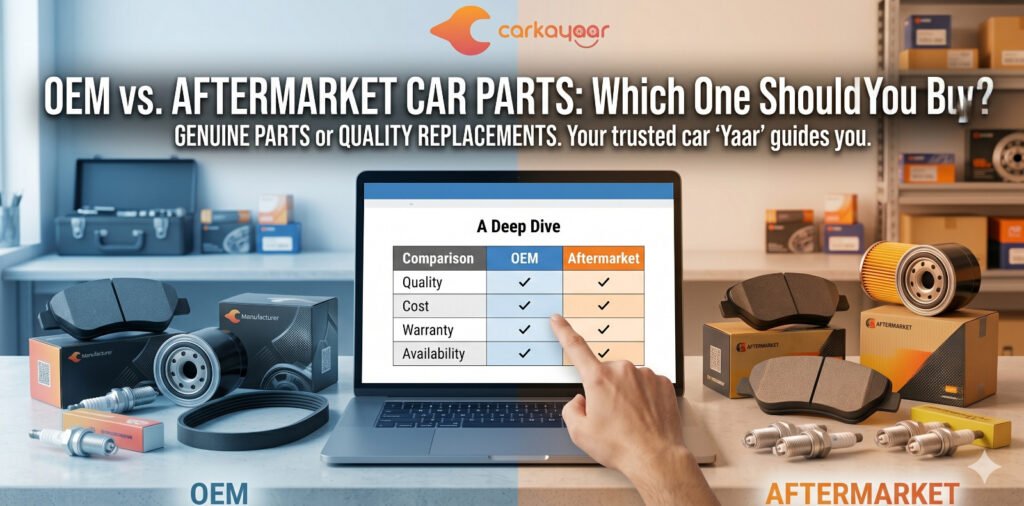
Choosing the right parts for your vehicle can feel like standing at a crossroads with a map written in a different language. On one hand, you have OEM (Original Equipment Manufacturer) parts, and on the other, a massive sea of Aftermarket options.
Whether you’re a DIY enthusiast or just someone trying to make sure their mechanic isn’t overcharging them, understanding the difference is crucial. This guide is designed to strip away the jargon and help you decide which path is best for your car, your safety, and your wallet.
What Are OEM Car Parts?
OEM Meaning
OEM stands for Original Equipment Manufacturer. These car parts are made by the same company that built your vehicle, or a contractor hired by the automaker to build parts to their exact specifications. When you buy an OEM part, you are getting an identical twin to the part that came on your car when it rolled off the assembly line.
Examples of OEM Car Parts
- Brake Pads: Engineered specifically for your car’s weight and braking system.
- Car Filters: Oil, air, and cabin filters designed for perfect airflow and filtration.
- Ignition Coils: Calibrated to the exact electrical needs of your engine.
- Suspension Parts: Shocks and struts tuned for the specific ride quality intended by the manufacturer.
Pros of OEM Parts
- Perfect Fit: Since they are made for your specific make and model, there’s no “massaging” required to get them to fit.
- High Reliability: You know exactly what you’re getting. The quality is consistent.
- Warranty Support: Most OEM parts come with a nationwide manufacturer’s warranty.
- Quality Assurance: These parts must meet the rigorous standards set by the car brand.
Cons of OEM Parts
- Higher Cost: You usually pay a premium for that brand-name logo on the box.
- Limited Availability: Usually, you have to go through a dealership or a specialized parts hub.
- Less Variety: There is only one “right” part; you can’t choose a “sportier” version.
What Are Aftermarket Car Parts?
Aftermarket Parts Meaning
Aftermarket parts are produced by companies other than the original manufacturer. These companies “reverse-engineer” the part to function the same way as the original.
Types of Aftermarket Parts
- High-Quality Aftermarket: Often made by companies that also make OEM parts (like Bosch or Denso), just sold under their own brand.
- Budget Aftermarket: Focused on the lowest possible price point.
- Performance Aftermarket: Designed to exceed the original specs (e.g., racing brakes or heavy-duty suspension).
Pros of Aftermarket Parts
- Lower Price: Often significantly cheaper than OEM, allowing for major savings on big repairs.
- More Options: You have hundreds of brands to choose from.
- Performance Upgrades: Sometimes, aftermarket companies identify a flaw in the OEM design and “fix” it, resulting in a part that actually performs better.
Cons of Aftermarket Parts
- Quality Varies: The quality spectrum is huge—from “better than original” to “it broke in a week.”
- Fitment Issues: Because some parts are made to fit multiple car models, they might require a bit of extra effort to install.
- Warranty Concerns: Using an inferior part that causes damage could lead to tricky conversations with your dealer.
When Should You Choose OEM Parts?
If your car is still under warranty, sticking with the OEM is usually the smartest move to avoid any disputes. It’s also highly recommended for safety-critical parts like airbags or complex sensors. If you drive a luxury or exotic car, OEM parts help maintain the vehicle’s resale value. Essentially, use OEM when an exact fit and total peace of mind are non-negotiable.
When Should You Choose Aftermarket Parts?
If you’re looking for budget-friendly repairs on an older vehicle (where the car’s value doesn’t justify expensive dealer parts), aftermarket is the way to go. It’s also the primary choice for performance upgrades. Furthermore, if the OEM part is on backorder, the aftermarket often has plenty of stock ready to ship.
Which Car Parts Should Be OEM vs. Aftermarket?
| Part Category | Recommendation | Why? |
| Disc Rotors | OEM | Prevents warping and ensures smooth braking. |
| Spark Plugs | OEM | Modern engines are very sensitive to spark gaps and materials. |
| Ignition Coils | OEM | Avoids “check engine” lights and misfires. |
| ABS Sensors | OEM | Critical for safety; aftermarket electronics can be finicky. |
| Filters | Aftermarket | Brands like Wix or K&N often exceed OEM standards for less. |
| Brake Pads | Aftermarket | High-quality ceramic aftermarket pads can offer less dust. |
| Engine Oil | Aftermarket | Brands like Eneos or Amsoil are often better than “house” oils. |
| Lights (Head/Tail) | Aftermarket | Know brands like Lumax headlight and Depo headlight outperforms OEM quality |
Are Aftermarket Car Parts Reliable?
The short answer is yes, but with a caveat: it depends entirely on the brand. Many aftermarket brands are actually “OE Suppliers,” meaning they make the parts for the car companies anyway. To identify a good brand, look for certifications like CAPA (for body parts) or long-standing reputations in racing and enthusiast forums.
Common Myths About Aftermarket Parts
- “Aftermarket is always low quality”: False. Some aftermarket parts are engineered to fix OEM flaws.
- “OEM is always better”: Not necessarily. Sometimes you are just paying for the logo.
- “Aftermarket voids your warranty”: In the U.S., the Magnuson-Moss Warranty Act protects you. A dealer cannot void your warranty just because you used an aftermarket part unless they can prove that the specific part caused the failure.
Tips to Avoid Fake Car Parts
Counterfeit parts are a growing problem. To stay safe:
- Buy from trusted websites and authorized retailers.
- Check the packaging: Fakes often have typos or poor-quality printing.
- Verify Authenticity: Many brands now include QR codes or holographic stickers.
- Check the Warranty: If a part has “no warranty,” it’s a major red flag.
Best OEM & Aftermarket Brands
When shopping, look for these industry leaders:
- OEM Leaders: Mopar (Chrysler/Jeep), Motorcraft (Ford), AC Delco (GM), Genuine Toyota/Honda.
- Top Aftermarket/OE Suppliers: Liquimoly ,NGK,LUK,HI-Q,TVS ,Brembo etc
How to Identify Genuine Aftermarket Spare Parts Online
Shopping online is convenient, but you have to be your own detective:
1. Check Brand Authorization
Legitimate sellers will often state they are “Authorized Distributors” for brands like Bosch or Bilstein.
2. Look for OEM Part Numbers
Even when buying aftermarket, the listing should reference the OEM Cross-Reference Number. This ensures the part is designed to replace your specific original component.
3. Check Product Reviews & Ratings
Don’t just look at the stars—read the comments. Look for mentions of “fitment” or “longevity.” If multiple people say the part didn’t fit their car, believe them.
4. Opt for verified dealer like Car ka Yaar
Car ka Yaar has been into business for many years, or did the shop pop up last week? They know the industry trends and involvements that allow buyers to buy the best and original equipment.
5. Check Warranty Information
A genuine manufacturer stands by their product. If a seller offers a 12-month or lifetime warranty, it’s a good sign of a quality aftermarket component. If the warranty is “30 days” or non-existent, keep scrolling!

Mr. Ashish Kumar is the Founder of Carkayaar (Car Ka Yaar) and has more than 10 years of experience in the Indian automotive industry. He has spent years helping car owners, workshops, and businesses find genuine car spare parts, engine oils, filters, and other automotive products. Through his experience, he understands one of the biggest problems faced by car owners in India—finding genuine parts at the right price and getting honest advice. Many customers end up paying more because of duplicate products, multiple middlemen, or unnecessary repairs. At Carkayaar, Mr. Ashish Kumar has built a strong network of manufacturers and authorized brands. By buying directly from manufacturers, Carkayaar removes unnecessary middlemen, which helps reduce costs. These savings are passed on to customers, allowing them to buy genuine spare parts at better prices while avoiding duplicate or low-quality products. Mr. Ashish Kumar believes that buying the right part is only half the job. The other half is making sure the repair is done by a skilled and trusted mechanic. Through Carkayaar, he helps customers choose the right products and also guides them to reliable workshops whenever needed. Our goal is simple—to make car maintenance easy, honest, and affordable. Through every article on Carkayaar, he shares practical advice based on real experience, helping car owners understand their vehicles, avoid unnecessary expenses, and make better decisions with confident.