
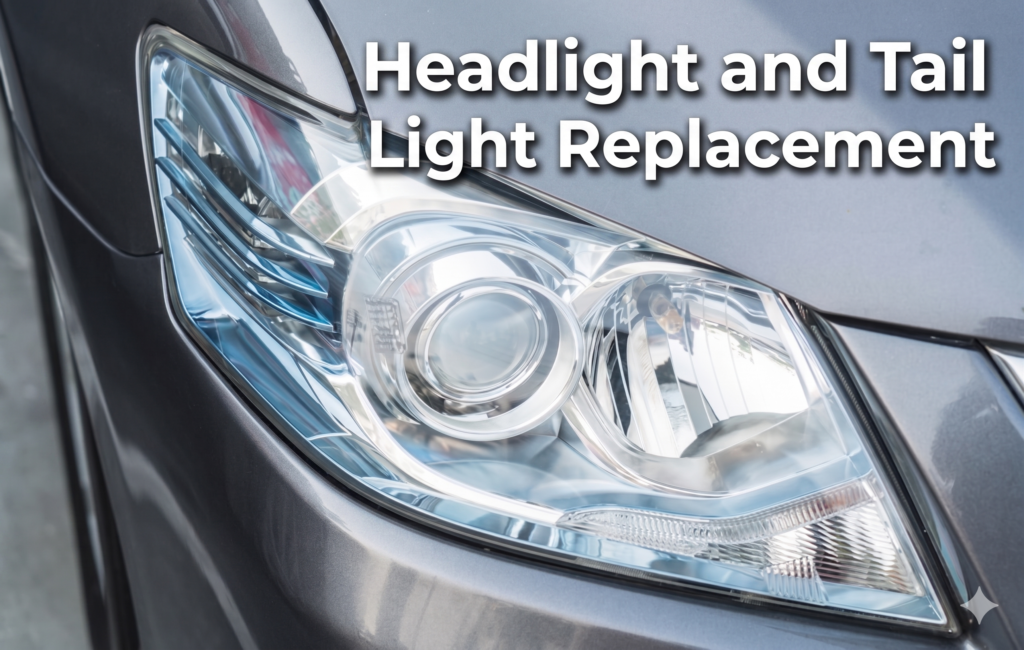
A working headlight and tail light setup is one of the simplest things on your car, yet it is also one of the most important. Burnt-out bulbs, cracked lenses, or foggy housings reduce your visibility at night, make it harder for other drivers to see you, and can even get you flagged during.The good news is that your car headlight and tail light replacement is one of the most beginner-friendly repairs you can take on, and with the right parts on hand, most jobs take less than thirty minutes. Whether you are sourcing a single replacement bulb or a full headlight assembly, Carkayaar has more than 10 years of experience in selling genuine car spare parts in India so you can get the job done right at the first time.
This guide walks you through everything you need to know, from spotting the warning signs of a failing light to choosing the correct bulb type, completing the replacement step by step, and understanding the rules that apply on Indian roads.
Why Headlights and Tail Lights Matter for Safety
Headlights and tail lights are not just about visibility for you. They are a communication system between your vehicle and everyone around it. Headlights illuminate the road ahead and signal your presence to oncoming traffic, while tail lights, brake lights, and indicators tell drivers behind you when you are slowing down, stopping, or turning. A single non-functional bulb increases the risk of rear-end collisions, missed turns, and confusion in low-visibility conditions such as rain, fog, or dusk. Routine checks and prompt replacement are a small investment that pays off in accident prevention and smoother passes during vehicle inspections.
Signs You Need a Headlight or Tail Light Replacement
Most car owners discover a lighting problem during a routine walk-around or when a pass by points it out. Watch for these common warning signs:
- One headlight or tail light appears noticeably dimmer than the other
- A bulb flickers, especially when the car hits a bump or pothole
- The light has gone completely dark on one or both sides
- The lens has yellowed, faded, or developed visible cracks
- Moisture or condensation is visible inside the housing
- A dashboard warning light for exterior bulbs is illuminated
- Other drivers flash you or signal that a light is out
- Failure of any sensors or a blaster
Types of Headlight and Tail Light Bulbs
Before buying a replacement, it helps to understand the bulb technology fitted in your vehicle. Most cars in India use one of the following three types, and your owner’s manual or the part’s catalog listing will confirm which one your model requires.
| Bulb Type | Average Lifespan | Brightness | Typical Cost |
| Halogen | 450 to 1,000 hours | Moderate, warm yellow light | Budget-friendly |
| LED | 15,000 to 30,000 hours | Bright, crisp white light | Mid to premium range |
| HID or Xenon | 2,000 to 10,000 hours | Very bright, intense white or blue-white | Higher cost, may need a ballast |
Tools You Will Need Before You Start
Most headlight and tail light jobs require only a handful of common tools. Gather these before you begin so the job goes smoothly:
- Replacement bulb or light assembly that matches your vehicle’s specification
- Phillips and flathead screwdrivers, or a small socket set
- Plastic trim removal tool to avoid scratching panels
- Nitrile or cotton gloves to keep oils off the new bulb’s glass
- A clean microfiber cloth and glass cleaner
- A torch or phone flashlight for tight engine bay spaces
Step-by-Step Guide to Replacing a Headlight Bulb
- Park on level ground, switch off the engine, and let the bulb cool if the car has been running.
- Open the bonnet and locate the rear of the headlight housing, which usually has a circular access cover.
- Remove the cover by twisting or unclipping it, depending on your vehicle’s design.
- Disconnect the electrical connector from the back of the old bulb by gently pulling the locking tab.
- Release the retaining clip or twist the bulb counter-clockwise, then pull it straight out.
- Wearing gloves, fit the new bulb into the socket without touching the glass, aligning the tabs correctly.
- Reconnect the electrical connector and refit the retaining clip or twist the bulb back into place.
- Replace the access cover and turn on the headlights to confirm the new bulb is working on both high and low beams.
Step-by-Step Guide to Replacing a Tail Light
- Open the boot or rear hatch and locate the access panel behind the tail light assembly.
- Remove any trim panels, cargo liners, or access covers using a trim removal tool to avoid cracking plastic clips.
- Disconnect the wiring harness from the bulb holder or the back of the assembly.
- If replacing only a bulb, twist the bulb holder counter-clockwise and pull it out, then remove the old bulb.
- If replacing the full assembly, remove the mounting bolts, clips, or nuts holding it to the body, then gently pull the unit free, watching for adhesive gaskets.
- Fit the new bulb or assembly, reconnect the wiring, and hand-tighten all fasteners before fully securing them.
- Reinstall trim panels and test the brake lights, tail lights, reverse light, and indicators with a helper or by reflecting them in a nearby window.
How to Choose the Right Replacement Parts
Picking the correct part number is the single most important step in this entire process. The wrong bulb shape, voltage, or connector type can cause poor beam pattern, error codes on newer vehicles, or a part that simply will not fit. Always cross-check your vehicle’s make, model, year, and trim level against the part listing before ordering, and where possible match the original equipment specification rather than guessing based on appearance.
Carkayaar is built specifically to remove this guesswork. Every listing is matched to your vehicle, so you can search by registration details or model and trim to find headlight bulbs, tail light assemblies, sockets, and wiring harnesses that are guaranteed to fit. Choosing a trusted supplier like Carkayaar also protects you from counterfeit bulbs, which often have inconsistent brightness, shorter lifespans, and beam patterns that can dazzle oncoming drivers.
DIY Replacement vs Professional Help
Replacing a single bulb is usually a straightforward DIY task that takes ten to thirty minutes with basic tools. However, some situations are better handled by a qualified mechanic or service center:
- The headlight or tail light assembly is sealed, bonded, or requires bumper removal
- Your vehicle has adaptive or matrix LED headlights that require calibration after replacement
- You notice corroded wiring, a blown fuse, or signs of a deeper electrical fault
- The bulb housing shows cracks that could let in moisture even after the new bulb is fitted
If any of these apply, it is worth having a professional verify the installation, especially since improperly aimed headlights are both a safety hazard and a common reason for failing inspection.
Average Cost of Headlight and Tail Light Replacement in India
Costs vary depending on whether you are replacing a single bulb or a full assembly, and whether the work is done at home or at a service center. As a general guide, a standard halogen bulb is the most affordable option, LED replacement bulbs sit in the mid-range, and a full headlight or tail light assembly for a passenger car typically represents the largest line item, particularly for models with integrated LED units or sensors. Labor charges at a service center are usually modest for a simple bulb swap but increase significantly if bumper removal, wiring repair, or headlight aiming is required.
Tips to Extend the Life of Your Car Lights
- Clean headlight and tail light lenses regularly to remove grime, oxidation, and road film
- Check the rubber seals and gaskets around housings for cracks that allow moisture in
- Avoid touching new bulb glass with bare fingers, since oils can cause hot spots and premature failure
- Replace bulbs in pairs when one side fails, since the other is likely close behind
- Have your headlight aim checked after any front-end repair or suspension work
Legal and Safety Considerations in India
Under the Central Motor Vehicles Rules, every vehicle on Indian roads is required to have functioning headlights, tail lights, brake lights, and indicators in good working order. Driving with a non-functional tail light or headlight can attract fines under traffic regulations and significantly raises the risk of an accident or insurance dispute if you are involved in a collision while a required light is out. Beyond the legal angle, properly aimed and functioning lights are one of the most cost-effective safety upgrades available to any car owner.
Frequently Asked Questions
How do I know if my headlight bulb or the whole assembly needs replacing?
If the bulb itself is dark, blackened, or the filament is visibly broken but the housing, lens, and connector are intact, a bulb-only replacement is usually enough. If the lens is cracked, fogged with moisture, or the housing is damaged, you will need a full assembly replacement.
Can I replace a headlight bulb myself without going to a mechanic?
Yes, on most vehicles a headlight bulb can be replaced at home in under thirty minutes using basic hand tools. Vehicles with sealed assemblies, adaptive LED systems, or bumper-mounted access points may require professional help.
How often should headlights and tail lights be replaced?
There is no fixed schedule, since bulb life depends on usage and bulb type. Halogen bulbs often need replacing every one to two years with regular driving, while LED units can last well beyond five years. Replace any bulb as soon as it fails rather than waiting for a fixed interval.
Why do both headlights need to be the same type and brightness?
Mismatched bulb types or brightness levels create an uneven beam pattern, which can reduce visibility on one side of the road and dazzle oncoming drivers on the other. Always replace both headlights with matching bulbs, even if only one has failed.
What is the difference between halogen, LED, and HID headlight bulbs?
Halogen bulbs are the most affordable and produce a warm yellow-white light with the shortest lifespan. LED bulbs are brighter, more energy efficient, and last significantly longer. HID or xenon bulbs produce the most intense light and often require a ballast, making them more complex to retrofit.
Is it safe to upgrade to LED bulbs in a car designed for halogen?
Many aftermarket LED bulbs are designed as direct replacements for halogen housings, but results vary depending on the reflector design. Choose products specifically listed as compatible with your vehicle to avoid poor beam patterns or glare for oncoming traffic.
Why do my tail lights look foggy or yellow over time?
Tail light and headlight lenses are typically made from polycarbonate, which can oxidize and yellow with UV exposure over time. Light oxidation can sometimes be polished out, but heavy yellowing or cracking usually means the lens or full assembly needs replacement.
Do I need to disconnect the car battery before replacing a tail light?
For a simple bulb swap, disconnecting the battery is usually not necessary as long as the lights are switched off. For more involved work, such as full assembly replacement or wiring repairs, disconnecting the battery is a safer precaution.
How do I find the right replacement part for my specific car model?
The most reliable method is to search by your vehicle’s exact make, model, year, and trim, since lighting components often vary even within the same model range. Platforms that match parts directly to your vehicle details, such as Carkayaar, reduce the risk of ordering an incompatible part.
What should I do if my new bulb does not light up after installation?
First, confirm the connector is fully seated and the bulb is oriented correctly in its socket. If the light still does not work, check the relevant fuse, since a blown fuse is a common cause of a light that fails immediately after a bulb change.
The most Important question which brand do I choose as a replacement for headlight and taillight for my car?
Carkayaar recommends for after-market oem application are
- Lumax Headlight & Lumax Tail light
Upgrade your vehicle’s lighting with Lumax Headlights and Tail Lights, designed for superior visibility, safety, and long-lasting performance. Engineered with precision, Lumax lights deliver a bright, focused beam for enhanced road clarity during night drives and challenging weather conditions.
The premium-quality construction ensures durability, resistance to vibrations, and reliable performance on every journey. Lumax Tail Lights provide clear signaling and improved rear visibility, helping keep you safe on the road while adding a stylish finish to your vehicle
DEPO Headlights deliver clear, focused illumination for safer nighttime driving, while DEPO Tail Lights ensure maximum rear visibility and reliable signaling on the road. Built with durable materials and advanced manufacturing technology, these lights offer long-lasting performance and resistance to harsh weather conditions.Depo headlights brings the original finish to your car and is the best choosen after-market replacement world wide
- Hella Headlamps
Designed with advanced lighting technology, Hella headlamps provide a powerful, focused beam for clear vision during night drives and adverse weather conditions.
- What is a ballast unit in a headlight? what role does it play?
A headlight ballast (sometimes mistakenly called a “blaster unit”) is an electronic control unit used in HID (High-Intensity Discharge) headlights and some advanced lighting systems.
Role of a Ballast in a Headlight:
- Ignites the HID bulb by generating a high-voltage surge.
- Regulates power supply to ensure stable light output.
- Protects the bulb from voltage fluctuations and electrical damage.
- Improves lifespan of the HID lighting system.
- Maintains consistent brightness during vehicle operation.
Without a functioning ballast, a HID headlight may fail to start, flicker, dim unexpectedly, or stop working altogether.
Key Benefits:
✔ Reliable HID bulb ignition
✔ Stable and efficient lighting performance
✔ Enhanced road visibility and safety
✔ Protection against electrical surges
✔ Longer bulb life
In simple terms, the ballast acts as the power controller and starter for HID headlights, ensuring the bulb receives the correct voltage to operate safely and efficiently.
How to Choose a Headlight Wiring Kit & When Is It Required?
A headlight wiring kit is essential when upgrading to higher-wattage bulbs, installing auxiliary lights, or experiencing dim headlights caused by voltage drop in the factory wiring.
When Do You Need a Wiring Kit?
- Upgrading from standard to high-power halogen bulbs
- Installing LED or HID conversion kits
- Headlights appear dim despite good bulbs
- Factory wiring is old or unable to handle higher current loads
- Adding fog lamps or auxiliary driving lights
How to Choose the Right Wiring Kit
✔ Match the bulb type (H4, H7, H11, 9005, 9006, etc.)
✔ Choose a relay-based harness for stable power delivery
✔ Look for heavy-gauge copper wiring for reduced voltage loss
✔ Ensure waterproof relays and connectors for durability
✔ Select a kit with an inline fuse for electrical protection
✔ Verify compatibility with your vehicle’s voltage system (12V or 24V)
Benefits of a Quality Wiring Kit
- Brighter and more consistent headlights
- Reduced strain on factory switches and wiring
- Improved bulb performance and lifespan
- Enhanced safety during night driving
A properly selected headlight wiring kit ensures maximum light output, reliable performance, and long-term protection for your vehicle’s lighting system.

Mr. Ashish Kumar is the Founder of Carkayaar (Car Ka Yaar) and has more than 10 years of experience in the Indian automotive industry. He has spent years helping car owners, workshops, and businesses find genuine car spare parts, engine oils, filters, and other automotive products. Through his experience, he understands one of the biggest problems faced by car owners in India—finding genuine parts at the right price and getting honest advice. Many customers end up paying more because of duplicate products, multiple middlemen, or unnecessary repairs. At Carkayaar, Mr. Ashish Kumar has built a strong network of manufacturers and authorized brands. By buying directly from manufacturers, Carkayaar removes unnecessary middlemen, which helps reduce costs. These savings are passed on to customers, allowing them to buy genuine spare parts at better prices while avoiding duplicate or low-quality products. Mr. Ashish Kumar believes that buying the right part is only half the job. The other half is making sure the repair is done by a skilled and trusted mechanic. Through Carkayaar, he helps customers choose the right products and also guides them to reliable workshops whenever needed. Our goal is simple—to make car maintenance easy, honest, and affordable. Through every article on Carkayaar, he shares practical advice based on real experience, helping car owners understand their vehicles, avoid unnecessary expenses, and make better decisions with confident.